

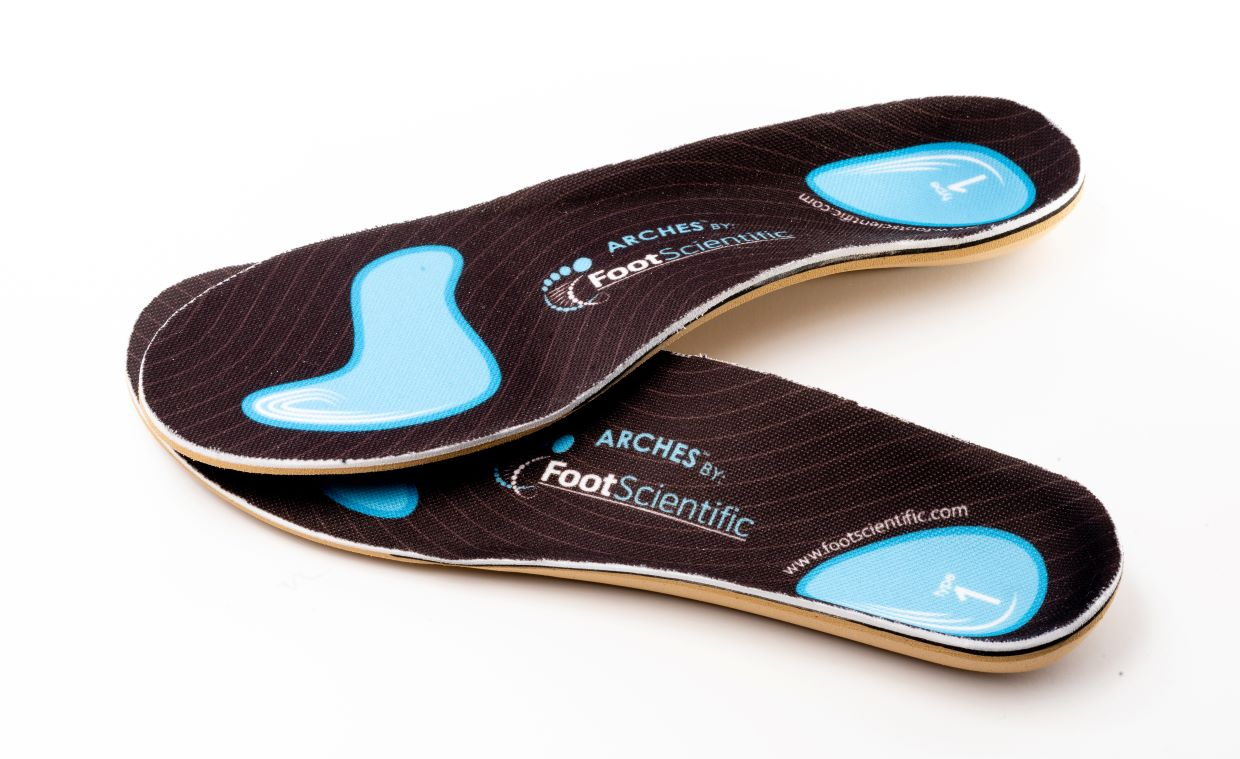


Arches Insoles Type 1
For the best fit, if you're between sizes, we recommend sizing up.
What's Your Foot Type?
Find Your Type
Type 1: Pronating, Overpronating, Flat Foot, Fallen Arches
Type 1's correction increases comfort, enhances performance, and prevents injuries. Clinical issues common to flat feet such as plantar fasciitis, ankle and knee pain, or pain from undue pressure on the inside of the foot are relieved.
Type 2: Neutral Arch
Type 2 is for additional arch support, weight distribution off pressure points, and foot stabilization for a more responsive and comfortable foot.
Type 3: Supination, High Arch, High Rigid Arch, Cavovarus Foot, Inner Knee Arthritis
Correction results in a more flexible foot, better pivot. It minimizes outer-foot stress fractures and ankle rolling. Type 3 also helps open space at the inner knee to lessen the pain of inner-knee arthritis.
Before & After
4-Layer Construction

Each pair is designed with 4 layers:
Allows for shock absorption, maintains the alignment, and maintains the correction of the orthotic.
Stabilizes the heel, providing comfort and support.
Allows for persistent shock absorption and comfort of the wearer.
Works to control perspiration, odor control, and transitional cushioning.
How to Install Your Arches Orthotics
Remove your current shoe lining/insole and replace it with the Arches Orthotics.
Trim the end to fit if needed. This step is usually unnecessary.
To ensure correction and extend the life of the orthotic, place a different pair of orthotics in each shoe. Replace every 6-12 months or as needed based on use.
Please trial for 14 days to assess comfort and performance.
Subscribe on your next purchase to maintain the ongoing benefits of your orthotics.
Need More Correction?
Try the orthotics as is. If you find you need additional correction, consider our wedges for more aggressive correction (2-4% posting available).
Shop Type 1 Wedges →Expert Insights from Dr. Rob Faux
Board-Certified Orthopedic Surgeon specializing in corrective foot biomechanics
What makes an orthotic corrective vs accommodative?
If you're spending money on insoles, this difference could determine whether you actually fix your foot pain or just mask it temporarily.
Corrective orthotics use biomechanical wedging and semi-rigid materials to realign your foot structure during weight-bearing. Accommodative orthotics primarily cushion your existing foot position without structural correction.
Think of it this way: corrective orthotics are like physical therapy for your feet—they create lasting change. Cushioning insoles are like taking aspirin—temporary relief, but the problem remains.
How Corrective Orthotics Work:
- Medial/Lateral Heel Wedging: The primary correction mechanism controlling your hindfoot by adding a ramp to either the inside or outside edge of the heel.
- Cork Amalgam vs EVA: Cork is firmer and better for heavier patients (over 200 lbs), lasting significantly longer. EVA allows rapid customization for localized deformities.
- Force Redistribution: When your heel is properly aligned, your ankle, knee, and hip follow suit—often reducing knee pain and lower back discomfort.
What foot types require corrective vs comfort orthotics?
Choosing the wrong orthotic type is like wearing the wrong prescription glasses—at best it won't help, at worst it creates new problems.
The 60-Second Self-Test:
- Wet your bare foot
- Step on dry concrete or paper
- Look at your footprint
What You See:
- Full footprint without arch gap = Flat feet (Type 1 needed)
- Moderate footprint with visible arch = Neutral feet (Type 2 needed)
- Very narrow middle foot = High arches (Type 3 needed)
Type 1 - For You (Pronation/Flat Feet):
Your symptoms: Inside ankle pain, arch fatigue, heel pain worse in the morning, plantar fasciitis. Your arch collapses with every step, overstretching your plantar fascia. The Type 1 features 3-5° medial heel posting to counter excessive valgus tilt and support your arch.


